MRH submission guidelines
Quick links:
- DOING AN ARTICLE OR VIDEO SHORT
- SENDING AN ARTICLE TO US
- BECOMING A CONTRIBUTING EDITOR
 So you’re interested in submitting an article/video to Model Railroad Hobbyist magazine? We publish articles and videos on all aspects of model railroading and on prototype (real) railroading as a subject for modeling. We welcome proposals for feature articles, video shorts, and columns, or the submission of articles and videos sent on speculation.
Model Railroad Hobbyist pays for first time global print and/or electronic publication rights to freelance manuscripts, images, video recordings, and audio recordings using a creative commons license. Under this license, you are free to distribute the work as long as the distribution vehicle remains free, and as long as you always provide a link back to this web site. You may not freely distribute this work if you fail to provide the URL of this site with the work. You may not use the work in a commercial publication that costs money without our permission.
Payment is made upon publication. Feature material generally should be limited to 3,000 or fewer words. Illustrative materials - including but not limited to photographs, graphics, charts, graphs, screen captures, video clips, and audio clips - are welcome and will be judged on their own merit. The material must be original and, where needed, referenced as to the source. For a discussion of our current pay rates, see our FAQ section.
REMINDER: Include your contact information (email, phone number) in every file of your submission. We get submissions (and have them in our dead pile) where the author failed to include their name or contact information - please don't YOU be one of them!
DOING AN ARTICLE OR VIDEO SHORT
Before you submit an article or video short, you may want to use this form to send an article query describing what you want to do. We’ll tell you if your idea fits our needs. Unless you've already written the article or shot the video, asking first is a good idea, since we’d like to help you focus your efforts on something we can use!
We also take unsolicited articles and videos on speculation, but be aware your chances of rejection are higher if you haven't checked with us first.
Also see this forum thread for a tutorial on how to produce an article for us.
Here's a general list of our requirements:
Text
Present your subject simply and directly in plain English. Keep it brief - most of our articles are one-third text and two-thirds photos or illustrations. Please email or upload your text files in Microsoft Word (.doc) or plain text format. There are basic style and technique tips at https://model-railroad-hobbyist.com/authors/style-guide-doc
Photographs
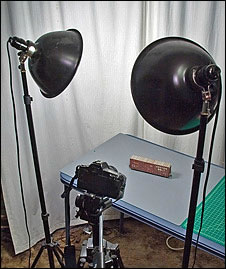 We strongly prefer digital photos in high quality JPEG format no smaller than 2400 x 1600 pixels and no larger than 4 megabytes in size. Step-by-step photos should be in color. Be sure to include a caption for every photo.
Photography makes or breaks most of the articles we see. If your photo quality is not well above average, it will hurt your submission chances more than poor text. It is very worth it for you to make sure your photos are as clear and well lit as possible. If you have any weak photos in your submission, consider redoing them (if you don't redo them, we will ask you to redo them before we will take your submission).
Do NOT cut corners on the photos that go with your article. The highest rated articles in our publications are almost always the ones with the best photos.
Here are a few pointers on photography:
- Use at least two lights, white-balanced to your digital camera.
- Position your lights for even lighting with no harsh shadows. Always light the background first, then the foreground.
- Stop your camera down as far as it goes; f22 is good, f32 is best. Mount your camera on a tripod so you can make long exposures.
- Bracket your exposures by shutter speed, and make many bracket exposures over a wide range of speeds. You're bound to get a couple of good exposures.
- Select what you think is the best exposure for each shot, along with one lighter and one darker for insurance, and send all three exposures to us.
- DO NOT use an on-camera flash. On-camera flash photos are fine for documenting the kids as they grow or getting a quick photo of grandma. They look like just what they are: hasty snapshots - and they make poorly lit modeling photos. Basing your article on flash photos using a camera flash virtually guarantees we will reject the article.
Technical notes: Subjects should be photographed using the RAW setting, if available, on your digital camera. The next best capture setting is the highest-quality JPEG or TIFF.
Photos should be exposed properly and fill the frame with the intended subject matter. To provide us with the most publication design flexibility, we recommend that you take photos of your subject matter with various compositions. Bracketing images with different exposure settings is also a good idea. It’s better to err on the side of sending us too many photos rather than sending us too few.
With modern high-resolution retina displays and the ability to zoom in on the digital images in our magazine, we now publish images at 300 DPI, which is the same as a print publication. Make sure to set any JPEG quality at 80% or higher to minimize compression artifacts.
We prefer getting a high quality JPEG of your image that is at least 2400 x 1600 in size and larger if you have it. Image files should not be corrected or manipulated for color, sharpness, size, cropping, or color mode unless you know what you are doing. Please label image files that have been altered for content or aesthetics as "altered images".
Include your image files as part of the single zip file upload as described below in our instructions on how to send your submission to us. Images of the size we prefer now are generally far too large to include as email attachments, so please upload the images using our article submission link or use Google Drive as described below.
Drawings
Clean, neat pencil drawings are fine for how-to illustrations, electrical schematics, track plans, and maps - these will be redrawn by our staff for publication. We prefer track plans be to scale. If you are a draftsman and want to contribute prototype drawings, email us for information on our style and standards.
Videos and Rich Media
While not always necessary, we want to encourage you to include some video or animation content with your article submission. If you're willing to think outside the box just a bit, with common tools like a tripod and a digital camera (still or video), it's not difficult to add useful media content most any article.
Here's a list of media content examples to get you started:
Benchwork article: Do a time-lapse image sequence of you building the benchwork, which is easily done with just a digital still camera and a tripod. We'll turn your dozens of still images into a short movie that shows the benchwork being built.
Turnout control article: Snap a series of stills (don't move the camera) showing the motion of the turnout control. Then we'll create an animated sequence of the turnout control in action using your stills.
Layout article: Snap overlapping images of the layout in the room, and send them to us. We'll stitch them together into one single super-wide image that readers can pan back and forth - just as if they were there in person!
Structure construction article: Draw your structure plans in Sketchup (free download) and send us the file. We'll create a 3D virtual reality image for your article that readers can spin a full 360 - as well as make the file available for download separately for viewing in the free Sketchup viewer.
DCC decoder install article: Do a series of 12 stills from all sides of the loco with the decoder installed and we'll stitch the images together into a 3D virtual reality image that readers can spin a full 360 to study the install. The 12 stills can easily be taken using a digital camera, tripod, and an inexpensive lazy susan.
Sound decoder install article: Do a short video clip of the loco running on your layout while you're putting the loco through its paces, complete with audio of the loco sound decoder.
Starting Timetable & Train Order operation article: Do a screen capture movie of you on your computer building a train timing and sequence "string" diagram in Excel, and record some voice over audio later to add commentary to the screen capture. We'll combine the video and audio here into a nice video to accompany your article.
From this list of media ideas, you can probably extrapolate some combination of things you might do for your article. For instance, if you have a rolling stock detailing article, you might decide to do a 3D virtual reality image of your finished piece of rolling stock, and to also include a Sketchup diagram of a particularly complex piece of scratchbuilt detail. Top it off with a short video of your car running through some nice scenery on a layout.
If you have an article idea and aren't sure what rich media content you could include, just contact us and we'll give you some ideas and coach you on how to produce the rich media part.
Article checklist
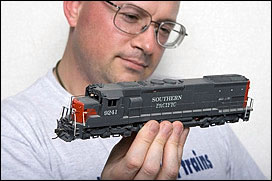 We ask that you please include the following items in most articles you send to us:
Text: Tell how you did your project using direct, simple language. Keep in mind most of our articles are no longer than six PDF pages. Make liberal use of photos and drawings, and label everything clearly. Use active writing, such as "I painted the wall white" or "Paint the wall white”. Avoid passive writing, like: "The wall was painted white."
Lead photograph: Show the result of your project at its best to encourage the reader to read your article and to give the project a try. If possible, show the subject of the article in a finished model scene, with the photo composed so the article subject is the dominant element. Alternately, show the subject against a plain, untextured backdrop of a neutral color - seamless photo backdrop paper is ideal.
How-to illustrations: Use photos (or drawings, if you have the necessary drawing skill) to show the project under construction. Number each as a figure (i.e., fig. 3) and refer to them by the corresponding number in the text. How-to photos should generally be taken against plain backgrounds.
IMPORTANT! For photos with text callouts and lines on the image, please also include a version of the image without the text and lines. This allows us to easily reproduce your text callouts and lines in a consistent style throughout our publication.
For hand drawings, please scan a clean sketch in grayscale at the high resolution (at least 600 dpi preferred) and upload it using our submission form.
Bill of materials: Provide a detailed list of items needed to build the project. Include manufacturers' names, part numbers, part names or descriptions, and quantities required. Be sure your information is current. Explain if the reader will have to substitute for items that are no longer available. Where possible, please provide URL links to the suppliers (and the specific items, where appropriate). If there is no online source, then include the manufacturer's address.
Prototype information (where applicable): Use photos and/or drawings to show the reader the prototype you followed. Photos may be color, black-and-white, or both. If scanning a photo, please scan it at as high a resolution as possible (600 dpi preferred). Please be sensitive to the use of photos you did not personally take, and contact the photographer or source to get permission to use the image in your submission.
IMPORTANT! Bio: Give us a couple paragraphs telling us how you got into the hobby, what your hobby interests are, and what some of your latest hobby projects are. Also tell us a little about yourself outside the hobby, what you do for a living, a little about your family, and any other interests you have.
Some 90% of the submissions we receive do not include a bio, so PLEASE do what we ask and include a bio! Remember our name is the Model Railroad HOBBYIST - we NEED your bio writeup and mug shot!
SENDING YOUR ARTICLE TO US (PLEASE FOLLOW)
IMPORTANT: DO NOT SEND YOUR ARTICLE AS AN EMAIL ATTACHMENT BECAUSE IT WON'T HAVE EVERYTHING WE NEED AND IT MAY GET LOST OR GET FLAGGED AS SPAM.
STEP 1: ORGANIZE YOUR SUBMISSION: Put together your article in MS Word, Open Office (free) or Libre Office (free). Format your article text with images and captions in the proper locations inline in with the text and save it as a PDF. This helps us see what you have in mind for the final article. The PDF format is especially compact and works well for our needs.
Include the following so we can easily assemble the article in our publishing software:
- Image/diagram files separate (ideally in their own folder called "Assets")
- PDF version of the article with all images, diagrams, and captions included inline
- Separate .docx or .txt version of the article (optional: PDF is generally sufficient)
- Bio document with photo - tell us a little about yourself ***REQUIRED***
- IN EVERY FILE OF YOUR SUBMISSION - Include article title and contact information: email, phone, mailing address repeated in EVERY TEXT FILE of your submission. By putting a consistent article title and contact information in EVERY TEXT FILE, then if any file ever gets separated, we know what submission it goes with and who the author is.
VERY IMPORTANT! ARTICLES THAT FAIL TO INCLUDE CONTACT INFORMATION MAY GET REJECTED AUTOMATICALLY. In your article and caption text files, include your full name, mailing address, email, and phone number. More than a few budding authors forget to include this information. If you want paid, then include this information!
STEP 2: MAKE A ZIP FILE: Package your individual files up into a single zip file. If you don't know how to make a zip file, you can find step-by-step instructions here: Windows or Mac. Zipping should be built in to your computer. If you need a free zip utility that runs on Windows, Macs, and Linux machines, check out Zipcreator.
STEP 3: SUBMIT YOUR ARTICLE USING OUR ARTICLE SUBMISSION AND UPLOAD FORM (limit 32 MB). This logs your submission in our system so we can easily track it and it asks for all the info we require from you in your submission.
Once your submission is uploaded, we will both get a link to it via email. We'll go download your submission, review it, and get back to you. If you don't hear from us within two weeks (it happens), then please email us for an update on your submission using editors@mrhmag.com.
WHAT TO DO IF YOUR ZIP FILE IS LARGER THAN 32 MB: Google Drive is your answer. It is 15GB of completely free "cloud storage" on the internet. Just put your files into a folder and upload your folder to your Google Drive, then get a share link and paste the Google Drive share link into the comments section of the article submission form. You can also send a share link to our articles email address: articles@mrhmag.com.
For more on how to use Google Drive, click here.
ALTERNATE STEP 3: MAILING YOUR ARTICLE TO US (OPTIONAL): If you have a slow web connection or you prefer to mail us your submission via "snail mail" (the Postal Service), you can do so. Just go to Contact us and scroll down to our mailing address. For large files, put them on a CD or an inexpensive thumb drive and mail them to us.
REMEMBER the BIO: Our name is Model Railroad HOBBYIST, so a bio and mug shot is required before we can accept a submission. For the bio, please format it as follows:
Sending in more text than not enough is preferred on the bio. Remember the mug shot photo!
FINAL NOTE: Submissions that don't follow these guidelines run the risk of getting rejected or in getting a reduced pay rate. If you want the best pay rate possible, PLEASE FOLLOW THESE GUIDELINES.
If you're not sure about something, please ASK US: editors@mrhmag.com.
BECOMING A CONTRIBUTING EDITOR
 A contributing editor gets regular writing assignments from us, participates in web-based staff meetings, and gets their name on our magazine masthead as a contributing editor in each issue, whether or not they actually contributed anything to that specific issue. Contributing editors are also paid a premium writing rate that's higher than our going author payment rate. Payment is paid upon our acceptance of a completed writing assignment.
If you are interested in writing for Model Railroad Hobbyist as a contributing editor, we would love to see your résumé and some samples of your work. Please keep in mind, however, that we work with only a small group of freelance contributors as contributing editors. In other words, we are highly selective.
Above all, we are looking for authors who exhibit exceptional writing and research ability. Potential contributing editors should also be able to:
- understand complex subjects and break them down for a general audience
- contribute entirely original, previously unpublished work
- finish assignments in a timely manner (no more than 6 weeks from assignment to completion)
- adapt to the Model Railroading Hobbyist magazine voice and article structure
- have several years of experience in the model railroading hobby
If we decide to try you out as a contributing editor, we will give you an article assignment. If we decide to accept your submission, we will pay you for the article at 1.5 times our normal author rate. All contributing editor work is work for hire unless we agree to other arrangements in advance.
If you are interested in writing for Model Railroad Hobbyist as a contributing editor, please send an email to editor positions indicating your interest. Here are the basic guidelines for contributing editor submissions:
- Copy and paste the text of your writing samples and résumé into the body of the contact us form.
- If possible, include a mix of published writing samples and unpublished writing samples (work that has not been through an editor). If possible, send samples that demonstrate your ability to explain complex subjects.
- The contact form does not allow attachments (sorry).
- Use the phrase "INTERESTED CONTRIBUTING EDITOR" in the subject line.
- Do not send non-railroading writing samples.
Because we receive many submissions, we may not be able to respond to your submission right away. There may be a delay before you hear back from us. If you would like an update and it's been a while (it happens), please send an email to editor positions asking for an update.
>> Posts index
Navigation
Journals/Blogs
Recent Blog posts: